Vendorius B2B finds the companies that can buy what you sell, emails them and books the meeting in your calendar. This is the mistake Matteo sees most often when companies look for new clients, especially in Italy, where we run most of our campaigns.
What mistake do many companies make when they write to new clients?
They introduce themselves by talking about themselves: how good the company is, how much better it is than the others. And they do it with companies that do not even know they have the problem it solves. None of this interests them, and not because the message is badly written: they do not see the problem, so whoever solves it means nothing to them.
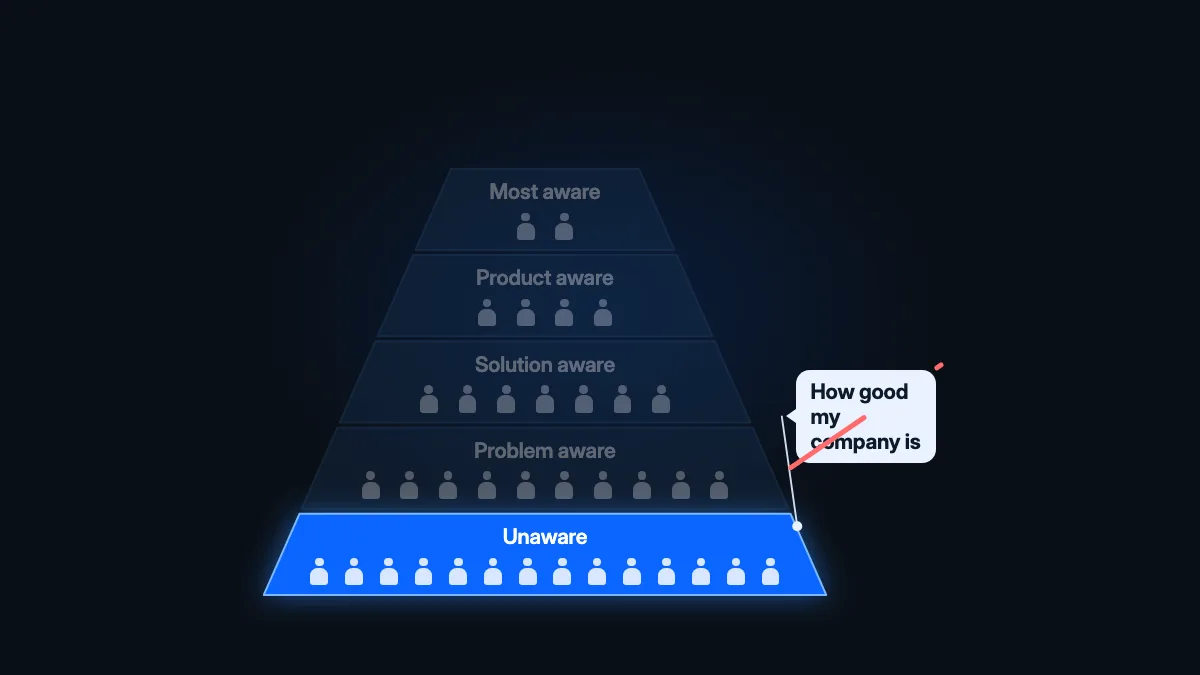
Why is it not enough even with those who know they have a problem?
Because even to someone who knows something is wrong, the speech about how good your company is says nothing. They do not know what solution you offer, and they do not even know their problem can be fixed. Before they know who you are, they need to understand that a way out exists.
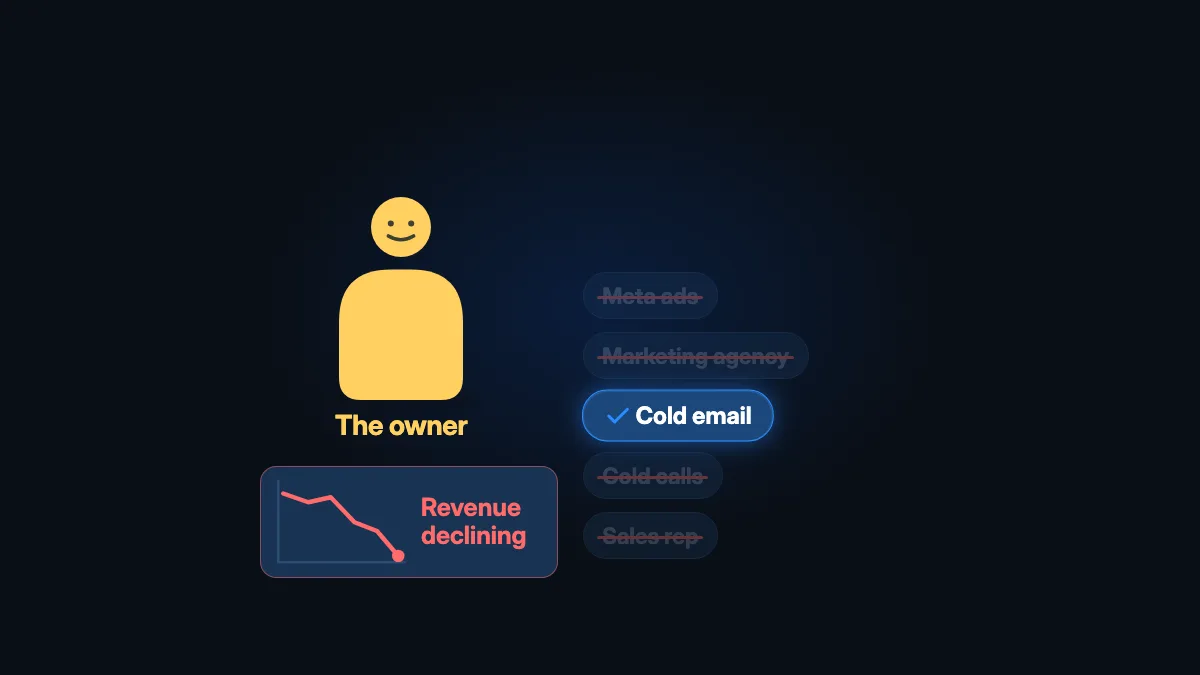
What should you write instead of the presentation?
A different message for each company, depending on what it knows. To those who only know they have a problem, you talk about their problem: for example, you look at their financial statements, see that revenue has dropped and send a document that explains, by your own estimate, how they got there. To those who know the problem can be fixed, you show with data and proof why your solution fits their case and the others do not.
The idea comes from Breakthrough Advertising by Eugene Schwartz, an American advertising book from 1966, which splits buyers into five levels of awareness: from the base, where people do not know they have the problem, to the top, where they already know who you are.
When does it make sense to talk about your company?
When the reader has already decided what kind of solution they want and is choosing who to buy it from. At that point there is nothing to invent: you prove with facts, that is with numbers, what you do that others do not. In our case it is the reply rate: across our campaigns, about 5.3% of the companies contacted reply.
What should you ask yourself before writing?
Where the companies you are writing to stand. It applies to an email campaign, a page on your website and a post: each level needs a different message.
Related pages
- Why the companies you email never reply
- Which companies should you email first
- Why referrals stopped bringing you new clients
